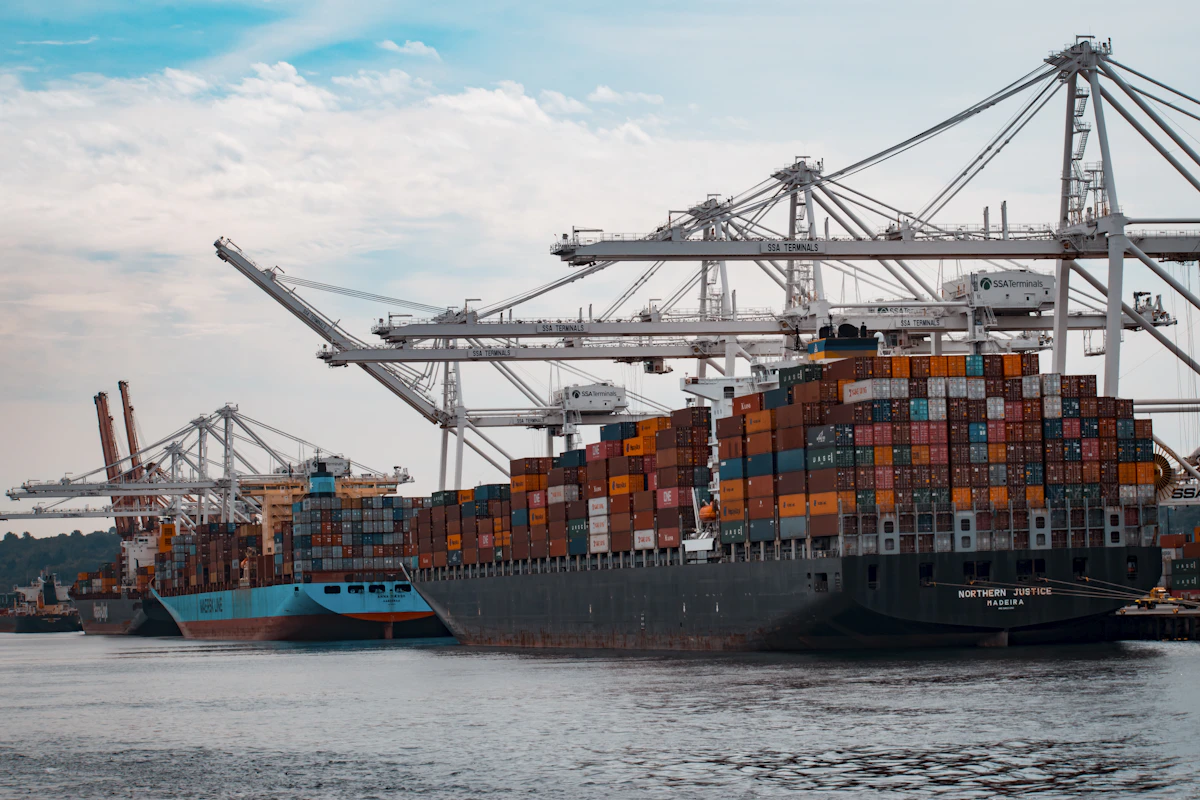
Bunkering after IMO 2020: VLSFO, MGO, and the sulphur cap
How one sulphur rule rewired marine fuel, and where bunkering stands now.

Natural gas is a difficult thing to move. At room temperature it is diffuse, low in energy per cubic metre, and only economic to pipe. Chill it to minus 162 degrees and it becomes a clear liquid that occupies six hundred times less space, dense enough to load onto a ship and sail across an ocean. That single change of state is the whole business of LNG.
A pipeline is the cheapest way to move gas, right up to the point where you cannot build one. Oceans, politics, and distance all end pipelines. Liquefaction is the answer. By cooling methane past its boiling point we shrink it into a liquid that carries roughly the same energy its gaseous volume would, but in a form a tanker can hold.
The 600 to 1 reduction is the number that makes the economics work. A standard LNG carrier holds enough gas to supply a mid-sized city for weeks, and it can deliver that cargo to any coast with a receiving terminal. What a pipeline fixes in place, LNG makes portable. That is why a molecule produced in one hemisphere can heat a home in another.
Keeping gas liquid at minus 162 degrees is a chain, and every link has to hold. It starts at the liquefaction plant, where gas is cleaned of water, carbon dioxide, and heavier fractions that would freeze solid, then cooled in stages through a refrigeration train until it condenses. From there it is stored in insulated tanks and loaded onto the carrier.
The ship itself is a giant vacuum flask. Its tanks are insulated rather than actively refrigerated, and they rely on the cargo staying cold by design. A small fraction boils off during the voyage, and rather than waste it, modern carriers burn that boil-off gas to help drive the ship. At the far end a regasification terminal warms the liquid back into gas and feeds it into the local grid. Break any link, let the cargo warm, and the whole parcel is at risk.
LNG is not a product so much as a temperature, held without a break from plant to pipeline.
The strategic point of LNG is reach. A country with no pipeline connection to a producer can still buy gas on the open market, because a carrier can dock anywhere a terminal exists. That turns gas from a regional commodity tied to fixed routes into something close to a global one, priced and traded across basins.
For a trading house that flexibility is the opportunity. Cargoes can be diverted mid-voyage toward the market paying the most, contracts can be structured around delivered price rather than a single pipeline, and buyers gain a second source that does not depend on one neighbour goodwill. The cold chain is demanding and the infrastructure is expensive, but what it buys is optionality, and optionality is worth paying for.
Moving LNG rewards operators who respect the cold. Tanks must be cooled gradually before loading so the shock of minus 162 degree liquid does not crack them. Cargo must be kept moving and monitored so pressure stays in band. Crews are trained specifically for the product, and terminals are built to standards that treat a single spill as unacceptable. None of it is improvised, and that is the point: the discipline is what makes a cryogenic cargo an ordinary, bankable trade.
How one sulphur rule rewired marine fuel, and where bunkering stands now.

From refinery to cooker, LPG travels under pressure.

A tank is where grades are made, timing is bought, and value is added.
Tell us the product, the volume, and the port. You will have a workable offer back within two working days.